Anna Simmons · 10 October 2026
Examining the Interplay Between User-Generated Taxonomies and Search Visibility in Specialized Communities
Specialized communities often rely on user-generated taxonomies to organize vast amounts of content, and these systems directly shape how material surfaces in internal and external search results. Researchers have documented the process across platforms ranging from academic repositories to hobbyist forums, where participants assign tags that evolve into structured navigation aids over time. Data from multiple studies indicate that communities adopting such taxonomies see measurable shifts in content discoverability within months of implementation.
How User-Generated Taxonomies Form and Function
Participants in niche groups create tags based on shared language and immediate needs rather than formal hierarchies, which produces flexible systems that adapt quickly to emerging topics. Observers note that these folksonomies differ from controlled vocabularies because they incorporate slang, abbreviations, and context-specific terms that outsiders might overlook. Studies conducted by information science teams at the University of Toronto reveal that tag frequency correlates strongly with repeated use patterns, while less common labels fade unless reinforced through community moderation.
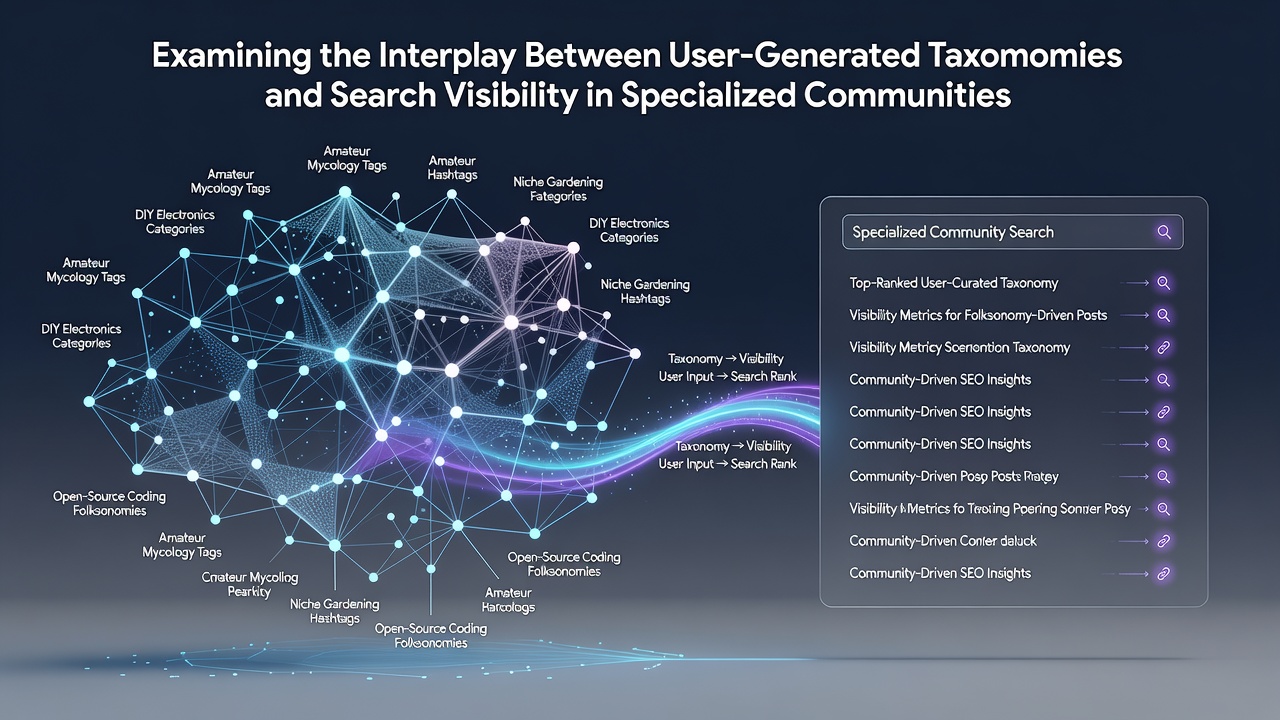
Search algorithms within these environments treat popular tags as signals of relevance, elevating content that aligns with high-traffic descriptors. External search engines also crawl these structures when they appear in metadata, which extends visibility beyond the original platform. Figures from a 2025 analysis by the Australian Research Council show that sites integrating user tags into structured data markup experienced an average 18 percent increase in indexed pages compared to similar communities relying solely on administrator categories.
Impact on Search Visibility Metrics
Visibility gains appear most pronounced when tags receive consistent application across related threads or posts. Communities that encourage tag standardization through guidelines report higher click-through rates from both internal searches and web referrals. Those who've examined Reddit subforums and Stack Exchange networks find that cross-referenced tags create pathways that surface older content during new queries, effectively extending its lifespan in results pages.

External engines incorporate these signals when they detect schema markup or consistent navigation patterns, yet the effect varies by domain authority. Lower-traffic specialized sites benefit disproportionately because user tags compensate for thinner backlink profiles. Research published through the National Science Foundation in the United States highlights cases where niche technical forums improved organic reach after participants refined tag clusters around core problem-solving terms.
Examples Across Different Community Types
Academic collaboration platforms demonstrate one clear pattern, where contributors tag datasets and papers with methodological keywords that later influence citation search tools. Professional developer communities show another, as tag sets built around error codes and library versions guide troubleshooting queries toward the most relevant solutions. In both settings, the interplay strengthens when moderators periodically audit tags to reduce duplication while preserving user-driven nuance.
October 2026 brings scheduled updates to several major community platforms that will adjust how tags feed into recommendation engines, according to announcements from the organizations involved. These changes follow earlier experiments in which communities tested hybrid systems combining folksonomies with machine-suggested refinements. Participants in pilot groups observed that search precision improved when user tags received weighting alongside automated clustering.
Challenges in Maintaining Effective Systems
Noise from inconsistent tagging remains a persistent issue, particularly when new members introduce overlapping or ambiguous labels without guidance. Some communities address this through automated suggestions drawn from existing tag pools, which reduces fragmentation while retaining the participatory element. Evidence collected by European research consortia indicates that platforms investing in lightweight curation tools sustain higher visibility levels over multi-year periods.
Scalability presents additional considerations as communities grow, because popular tags can overwhelm niche descriptors and bury specialized content. Solutions that emerged in 2024 and 2025 include layered taxonomies where broad tags sit alongside granular sub-tags, allowing both general and precise searches to succeed. Observers tracking these developments note that communities balancing the two layers maintain steadier traffic patterns.
Conclusion
The relationship between user-generated taxonomies and search visibility continues to evolve as platforms refine their algorithms and communities refine their practices. Available data demonstrate consistent patterns across regions and community types, with tag adoption influencing both internal navigation and external indexing. Those monitoring developments through October 2026 will likely see further integration of these systems with emerging search technologies, provided communities sustain active participation in tag creation and refinement.