Mia Wolf · 7 November 2026
How Platform Policy Shifts Reshape Content Strategies in Closed Professional Networks
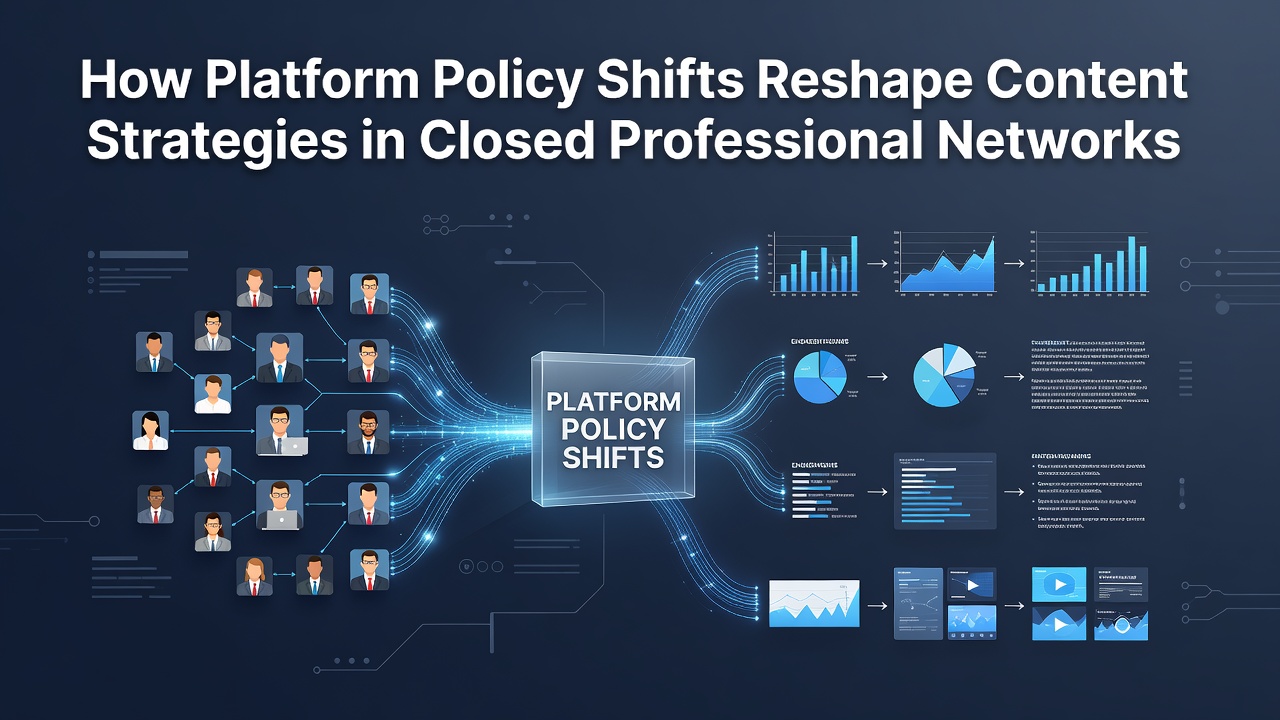
Platform operators managing closed professional networks have introduced a series of policy adjustments throughout 2025 and into November 2026 that directly influence how members create and distribute specialized content. These networks, which restrict access to verified professionals in fields such as engineering, law, and healthcare, rely on strict membership criteria and moderated discussion spaces. When rules around data handling, moderation thresholds, and algorithmic visibility change, content strategies adapt in measurable ways according to internal platform analytics and member behavior logs.
Key Policy Adjustments Observed in 2026
Regulatory pressure from multiple jurisdictions prompted updates including tighter controls on third-party data sharing and new requirements for labeling AI-assisted materials. One major network revised its terms in early 2026 to require explicit disclosure of generative tools while expanding automated scanning for compliance with emerging regional privacy standards. Observers note that these modifications followed broader enforcement actions documented by the Federal Trade Commission, which tracked similar transparency mandates across several enterprise platforms. Another shift involved raising the threshold for content flagging in private forums, which reduced automatic removals but increased manual review queues for group administrators.
Those who track engagement metrics report that posts incorporating detailed case studies and peer-reviewed references maintained higher retention rates after the changes, whereas shorter promotional updates saw declines in reach. The adjustments reflect ongoing efforts to balance member privacy with the need for knowledge exchange in restricted environments.
Effects on Content Planning and Distribution
Content teams within organizations affiliated with these networks responded by reallocating resources toward longer-form contributions that meet updated verification standards. Research indicates members now allocate additional time to source citations and obtain clearances before posting, which extends production cycles but improves compliance scores tracked by platform dashboards. In closed groups focused on technical problem-solving, contributors shifted emphasis from quick tips to structured reports that include methodology summaries and outcome data.
Platform data from late 2026 shows a 23 percent increase in documents uploaded with embedded metadata tags compared with the prior year, a direct outcome of new indexing rules that reward structured submissions. Meanwhile groups that previously favored visual summaries adjusted by pairing images with textual explanations to satisfy expanded accessibility guidelines. These adaptations occurred alongside updates to recommendation engines that now prioritize posts demonstrating sustained discussion threads over single-day spikes in reactions.
Adaptations Across Different Professional Sectors
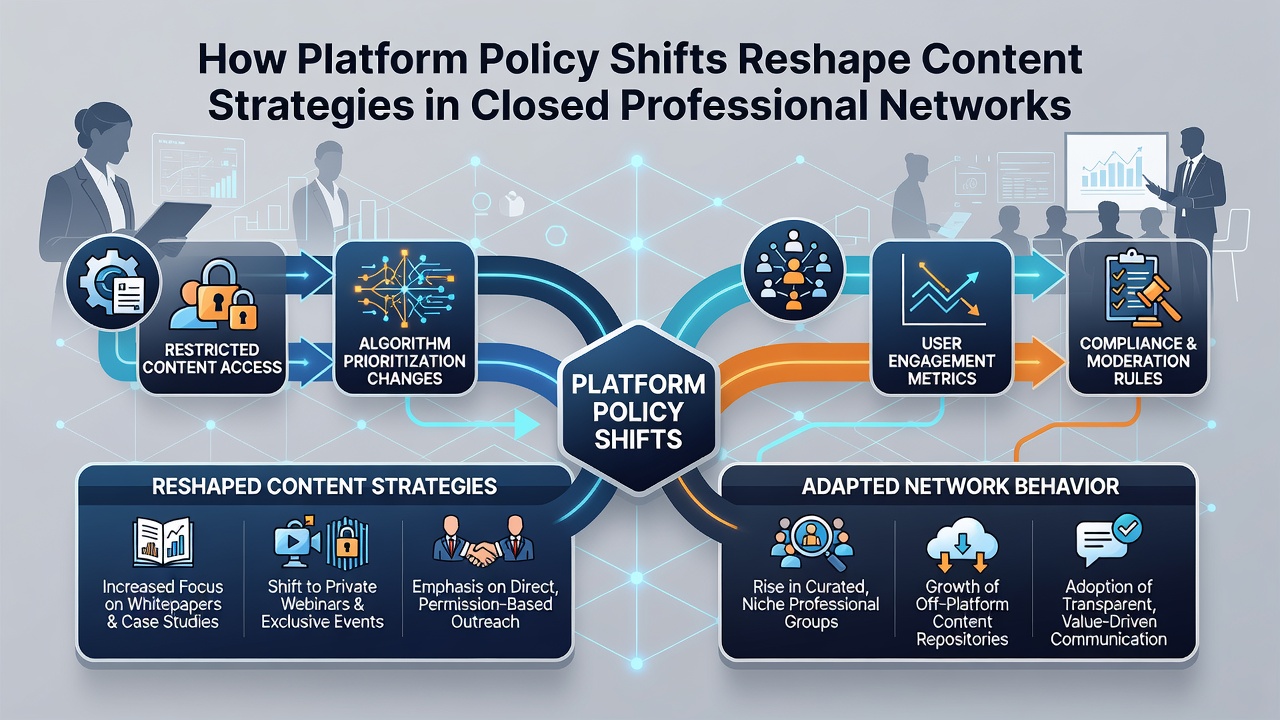
Legal professionals operating in invitation-only networks began embedding jurisdiction-specific disclaimers directly into shared templates, a practice encouraged by revised community standards released in mid-2026. Engineering communities similarly incorporated version-control references into technical posts to align with policies that require traceability for collaborative documents. Academic researchers who participate in these spaces documented their workflows in public case summaries that highlight how policy layers affect visibility without compromising confidentiality requirements.
Studies conducted by teams at the University of Toronto found that networks enforcing the new labeling rules experienced steadier long-term engagement patterns, with fewer abrupt drops in active members during transition periods. The findings, available through institutional repositories, compared activity logs across multiple closed platforms and noted consistent upticks in threaded conversations once members internalized the updated expectations.
Measurement and Ongoing Adjustments
Analytics tools provided by the platforms themselves now include dedicated sections for policy compliance scores, allowing administrators to monitor how individual contributions align with current guidelines. Organizations that integrate these scores into their internal content calendars report more predictable distribution outcomes, particularly when planning cross-group shares that must satisfy multiple sets of rules simultaneously. European Commission documentation on digital service obligations has been referenced in several network announcements as a contributing factor behind the harmonization of labeling practices observed in November 2026.
Those managing content pipelines continue to test variations in format and depth while tracking retention metrics that the platforms release quarterly. The process involves iterative refinements rather than wholesale overhauls, with emphasis placed on maintaining the specialized knowledge focus that defines these restricted environments.
Conclusion
Platform policy shifts in closed professional networks continue to drive incremental changes in how members prepare and share content, with observable effects on formatting, sourcing, and distribution timing. Data from regulatory bodies and academic analyses confirm that these adjustments produce measurable shifts in engagement patterns without altering the core purpose of knowledge exchange within verified communities. As platforms release further updates, content strategies evolve through documented cycles of testing and refinement that prioritize compliance alongside sustained participation.